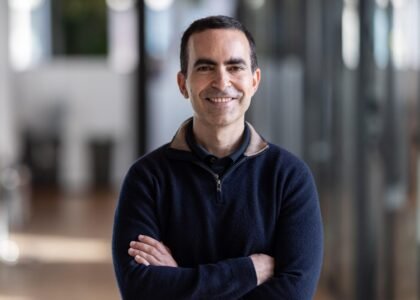
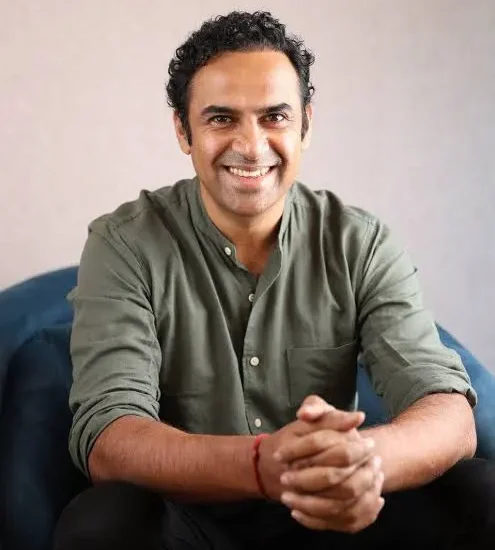
Prashant Warier did not set out to build a healthcare company. He set out to solve systems that break under scale.
Trained as an engineer and researcher, Warier’s early career moved through optimization, analytics, and large-scale applied artificial intelligence. He earned his doctorate in operations research, worked on algorithmic systems in logistics and enterprise software, and later helped build and scale analytics businesses in India. One of the companies he co-founded was acquired, giving him early exposure to what it means to turn research into a durable commercial operation.
Healthcare entered the picture later, and not through sentiment. Warier has spoken about encountering medical imaging as a problem that looked familiar to him as a systems thinker. The machines were there. The data was there. What was missing was human attention. Scans accumulated faster than specialists could interpret them. Decisions were delayed not because people were careless, but because the volume overwhelmed the system.
Qure.ai was founded in 2016 to address that gap.
The company builds artificial intelligence software that reads medical images and supports clinical decision-making, with a focus on chest X-rays and CT scans. Its tools are used to screen for conditions such as tuberculosis, lung cancer, and stroke, often in settings where specialist capacity is limited or unevenly distributed. Rather than positioning its technology as a replacement for doctors, Qure.ai frames it as diagnostic infrastructure, a way to expand capacity without pretending the workforce shortage can be solved through hiring alone.
That framing reflects Warier’s approach as an entrepreneur. He does not talk about disruption. He talks about throughput. He does not emphasize intelligence as a feature. He emphasizes time. In his view, health systems fail when decisions pile up faster than they can be processed. AI, applied carefully, can redistribute attention inside those systems.
From the outset, Qure.ai focused on deployment rather than demonstration. The company invested early in clinical validation, regulatory approvals, and integration into existing hospital workflows. This was slower and more expensive than building a prototype, but it allowed the company to move beyond pilots and into sustained use. Over time, Qure.ai expanded across geographies, operating today in dozens of countries and thousands of clinical sites.
That operational depth has become a defining feature of the business. Qure.ai holds multiple regulatory clearances, including approvals in the United States and Europe, and its tools are used in real screening programs rather than controlled environments. The company works with hospitals, health systems, governments, and large healthcare organizations, embedding its software where diagnostic delays carry real consequences.
Investors backing Qure.ai often point to this maturity. Healthcare AI is crowded, but few companies combine global reach, regulatory progress, and long-term deployment at scale. Qure.ai has raised significant growth capital to expand its footprint, invest further in foundational models, and deepen its presence in regulated markets. That capital supports an ambition that is measured rather than grandiose. The company aims to be present wherever imaging exists and human capacity does not keep up.
Warier’s leadership style mirrors that ambition. He is technical, but pragmatic. He speaks fluently about data and models, but spends just as much time on procurement cycles, reimbursement realities, and the constraints of public health systems. He appears regularly at global health and AI forums, where his arguments are grounded less in speculation than in what he has seen fail and succeed in practice.
There is a discipline to how Warier positions both himself and the company. Qure.ai does not promise that AI will transform healthcare overnight. It operates on the assumption that healthcare systems are already under strain and that incremental improvements at scale can change outcomes. That mindset has allowed the company to stay focused as interest in healthcare AI has surged and ebbed.
Prashant Warier belongs on a list of entrepreneurs to watch because he represents a particular kind of builder that is becoming more relevant. He builds companies that embed themselves into systems under pressure. He prioritizes reliability over visibility. He accepts the slow work of regulation and validation as part of the business, not as an obstacle to it.
As populations age, imaging volumes grow, and specialist shortages persist, diagnostic capacity will become a defining constraint of modern healthcare. Qure.ai is built for that future. Warier is building it with the patience of someone who understands that in healthcare, endurance matters as much as invention.
Click the ⤢ Icon to View the Magazine in full Screen for Best View
Designed as a seasonal publication, Voice of Development brings together research, reporting, and analysis meant to be read deliberately and revisited over time. Winter 2026 is a starting point: an attempt to answer, with clarity and restraint, what AIs can actually do—and what they cannot do.

Disclaimer: VoD Capsules are AI-generated. They synthesize publicly available evidence from reputable institutions (UN, World Bank, AfDB, OECD, academic work, and other such official data sources). Always consult the original reports and primary data for verification.