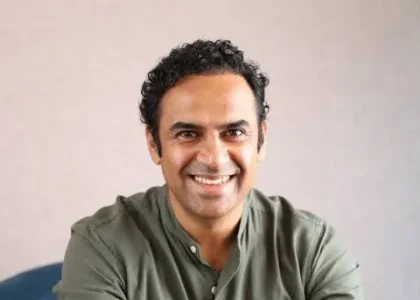

Oaswald Anonadaga operates at the seam where technology meets legitimacy. His work is less about building faster models and more about asking a harder question: who is allowed to understand, question, and shape the systems increasingly governing everyday life.
Founder & CEO, Trustur AI
Africa / Global
Trained across technology and law, Anonadaga has positioned himself as a founder focused on AI not as a consumer product, but as an institutional interface. His company, Trustur AI, reflects that orientation. Rather than competing in the race to automate tasks or generate content, Trustur is framed as an AI assistant and research platform designed to help people interrogate systems, policies, and decisions that affect development outcomes.
Anonadaga’s public work consistently returns to one theme: opacity is a form of power. In development, governance, and public policy contexts, decisions are often justified through technical language that excludes non-experts. AI, in his view, risks reinforcing that imbalance if it is treated as an oracle rather than a tool. Trustur AI is positioned as a counterweight to that dynamic, focusing on explanation, interpretation, and accessibility rather than prediction alone.
Trustur’s public-facing materials describe the platform as an AI assistant oriented toward research, analysis, and development contexts. While detailed product specifications remain limited in public documentation, the company’s framing emphasizes clarity over abstraction. Trustur is not marketed as replacing human judgment. It is positioned as supporting it, particularly in environments where policy, data, and institutional processes are difficult to navigate.
Anonadaga’s presence extends beyond product building. He is an active participant in AI and development conversations, appearing at forums and events focused on the Global South, youth leadership, and international cooperation. In these settings, he speaks about AI as a governance challenge as much as a technical one. His interventions often stress that inclusion is not achieved by simply deploying tools, but by shaping who those tools are built for and how they are explained.
That positioning places Trustur AI in a different category from most early-stage AI startups. It is not optimized for rapid scale through enterprise automation. It is oriented toward credibility, trust, and institutional relevance. The ambition is not to dazzle with capability, but to normalize AI as something that can be questioned, contextualized, and used responsibly by people operating outside elite technical circles.
Anonadaga also leads FloodGates International, an entity that appears connected to his broader interest in systems change and global engagement, though its specific mandate is less clearly defined in public sources. Together, these efforts suggest a founder focused on connective infrastructure rather than standalone products.
What makes Oswald Anonadaga a figure to watch is not market dominance or viral traction. It is his insistence that AI’s next frontier is not intelligence, but legitimacy. As governments, institutions, and development actors increasingly rely on algorithmic systems, the demand for tools that explain rather than obscure will only grow.
Anonadaga is building in that space early. He is treating trust not as a branding exercise, but as a design constraint. In a field moving quickly toward automation and abstraction, that choice is deliberate.
And it may prove essential.
Click the ⤢ Icon to View the Magazine in full Screen for Best View
Designed as a seasonal publication, Voice of Development brings together research, reporting, and analysis meant to be read deliberately and revisited over time. Winter 2026 is a starting point: an attempt to answer, with clarity and restraint, what AIs can actually do—and what they cannot do.

Disclaimer: VoD Capsules are AI-generated. They synthesize publicly available evidence from reputable institutions (UN, World Bank, AfDB, OECD, academic work, andother such official data sources). Always consult the original reports and primary data for verification.