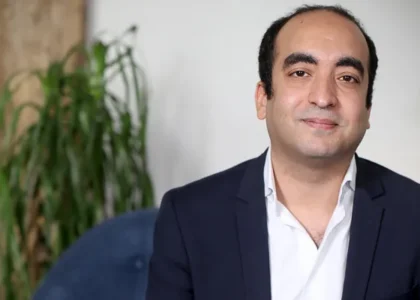

Matías Muchnick did not come to food technology through activism or dietary ideology. He came through economics, finance, and frustration with how slowly large industries change.
Muchnick was trained in business and economics at the University of Chile and later completed executive education at institutions including Harvard, Stanford, and UC Berkeley. Early in his career, he worked in finance and global banking. He saw how capital moves efficiently across markets, and how innovation does not. Food, in particular, struck him as an industry where tradition outweighed optimization.
Before founding NotCo, Muchnick co-founded Eggless Co., a plant-based food company focused on egg alternatives. The company was eventually sold, but the experience left a clearer question behind. Plant-based food was growing, yet it remained expensive, slow to develop, and often unsatisfying to mainstream consumers. Taste, texture, and familiarity remained barriers. Moral arguments were not enough to change mass behavior.
NotCo was founded in 2015 in Santiago, Chile, alongside a technical team that included machine learning and food science expertise. From the beginning, the company was structured differently from most food startups. Rather than starting with a product and iterating recipes by hand, NotCo began with a system. That system became Giuseppe.
Giuseppe is NotCo’s proprietary artificial intelligence platform. It analyzes the molecular structure of animal-based foods and compares them against a vast database of plant ingredients to identify combinations that replicate taste, texture, aroma, and functionality. The output is not a finished product but a recipe blueprint. Human food scientists then refine and validate it.
This approach reframed food formulation as a computational problem. Instead of relying on slow trial-and-error methods, NotCo could compress years of R&D into months. One of its earliest products, NotMilk, used an unexpected combination of ingredients such as pineapple and cabbage to replicate dairy milk. The formulation worked not because it sounded appealing, but because Giuseppe identified molecular compatibility that humans had overlooked.
Under Muchnick’s leadership, NotCo moved quickly from theory to market. The company launched a portfolio of consumer products including NotMilk, NotBurger, NotMayo, NotChicken, and NotIceCream. These products scaled across Chile and then expanded into Brazil, Argentina, Colombia, and the United States. NotCo products entered major retail chains and foodservice partnerships, including collaborations with Burger King, Dunkin’, and Shake Shack.
By 2021, NotCo became Chile’s first unicorn after raising capital at a valuation of approximately $1.5 billion. Investors included Bezos Expeditions, The Craftory, and other global funds. The valuation was driven less by plant-based enthusiasm and more by the underlying technology. NotCo was increasingly viewed not just as a consumer brand, but as a food R&D platform.
That shift became explicit as the company expanded into B2B partnerships. NotCo entered a joint venture with Kraft Heinz to develop plant-based cheese products, using Giuseppe to accelerate formulation inside a legacy CPG organization. This model positioned NotCo as both a brand owner and a technology supplier. Food companies could either compete with NotCo on shelves or work with it behind the scenes.
Muchnick has been consistent in how he frames this strategy publicly. NotCo, in his view, is not trying to convince the world to eat differently. It is trying to remove friction from changing what the world already eats. AI becomes the leverage point. If taste, price, and familiarity converge, consumer behavior follows without persuasion.
The scale of the opportunity reflects that logic. The global alternative protein market is projected to reach hundreds of billions of dollars over the next decade. Yet Muchnick has repeatedly emphasized that NotCo is not limited to plant-based meat or dairy replacements. Giuseppe can be applied across categories wherever animal-derived ingredients dominate. The long-term ambition is a computational layer for food design itself.
Muchnick’s entrepreneurial profile is shaped by this pragmatism. He speaks less about disruption and more about replacement. Less about ideology and more about systems. His public appearances focus on execution, partnerships, and the mechanics of scaling technology inside conservative industries.
That posture has become more important as the market has matured. The plant-based sector has faced volatility, margin pressure, and consumer skepticism. NotCo has responded by narrowing SKUs, adjusting cost structures, and doubling down on its technology advantage. The company has stated its intention to reach profitability and has explored longer-term paths such as an eventual public listing, though timelines remain fluid.
What places Matías Muchnick among the entrepreneurs to watch is not that he made food trendy or plant-based appealing. It is that he reframed food innovation as an engineering problem and built a company capable of operating on both sides of the table. NotCo can sell to consumers. It can also sell to the companies those consumers already trust.
In an industry defined by scale, margins, and legacy power, that dual position matters. Muchnick has built a company that does not need to persuade incumbents to disappear. It gives them a reason to change.
Click the ⤢ Icon to View the Magazine in full Screen for Best View
Designed as a seasonal publication, Voice of Development brings together research, reporting, and analysis meant to be read deliberately and revisited over time. Winter 2026 is a starting point: an attempt to answer, with clarity and restraint, what AIs can actually do—and what they cannot do.

Disclaimer: VoD Capsules are AI-generated. They synthesize publicly available evidence from reputable institutions (UN, World Bank, AfDB, OECD, academic work, and other such official data sources). Always consult the original reports and primary data for verification.