The 2025 disaster declaration in Malawi reflects a catastrophic food-security crisis: prolonged drought, high prices and climate stress pushed more than four million people to the brink of hunger — prompting a nationwide emergency.
Disclaimer: VoD Capsules are AI-generated. They synthesize publicly available evidence from reputable institutions (UN, World Bank, AfDB, OECD, academic work, and other such official data sources). Always consult the original reports and primary data for verification.
In late October 2025, the government of Malawi — under President Peter Mutharika — declared a “state of disaster” for 11 of its 28 districts, responding to a bleak assessment by the Malawi Vulnerability Assessment Committee (MVAC) that projected roughly 4 million people (around 22% of the population) would face acute food insecurity in the 2025/26 lean season (October–March).
As conditions worsened, by mid-November the disaster declaration was extended to cover all 28 districts and four cities, underlining the breadth of the crisis.
The causes combine climate-induced prolonged dry spells, which decimated rain-fed agriculture (upon which roughly 80% of Malawians depend), with surging commodity prices and macroeconomic stress — a pattern consistent with region-wide climate shocks linked to changing rainfall patterns and possibly the broader effects of climate change.
In response, the government invoked powers under the recently adopted Disaster Risk Management Act (2023), launched the 2025–2026 “Lean Season Food Insecurity Response Plan,” and appealed for domestic and international humanitarian assistance.
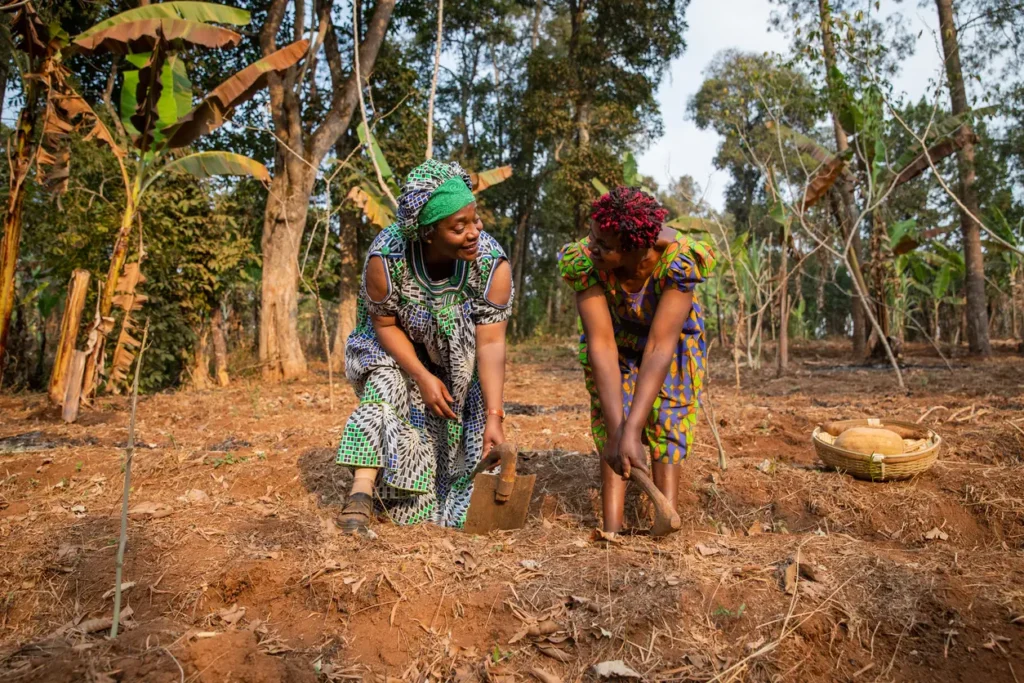
This isn’t just a drought or “bad harvest” — it’s a socio-climate shock that reveals how deeply intertwined Malawi’s food security is with climate variability, global commodity trends, and weak buffers. The scale of the extension — to every district and city — signals that this is not a localized hazard but a systemic shock.
| Report / Study (Year) | What it covers / Why useful | Official Link |
|---|---|---|
| Malawi Humanitarian Snapshot – October 2025 (United Nations Office for the Coordination of Humanitarian Affairs, 2025) | Overview of humanitarian needs and population at risk following the disaster declaration | OCHA Snapshot |
| “Millions at Risk: Malawi Extends State of Disaster as Food Crisis Deepens” (World Vision International, 2025) | Details on extension of disaster to all districts and implications for food aid | WVI Brief |
| WFP Malawi Country Brief – October 2025 (World Food Programme) | Analysis of food security trends, response plans and lean-season outlook | WFP Brief |
| “How a deadly drought is displacing thousands in Malawi” (2025, The Guardian) | On rural displacement, water scarcity, and livelihood disruption linked to climate change | Guardian Analysis |
How might repeated climate-linked disasters influence internal migration, urbanization, and long-term economic development in Malawi?
How could Malawi realistically build climate-resilient rural livelihoods (e.g. drought-resistant crops, irrigation, social protection)?
What institutional reforms or international funding mechanisms (e.g. climate adaptation finance, social safety nets) are most feasible to reduce vulnerability in Malawi’s context?
VoDGPT is an AI system powered by OpenAI, and it can make mistakes.
Use VoD Capsules as a starting point for understanding; always review the linked reports and verify critical information.