
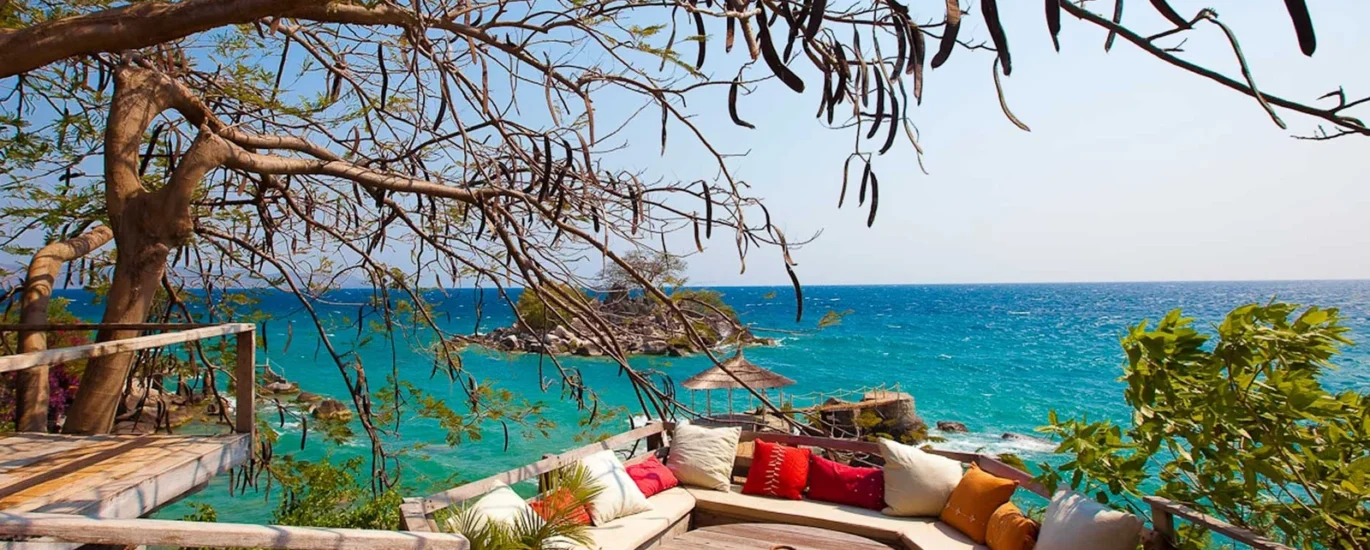
Nestled on the shores of Likoma Island in Lake Malawi lies Kaya Mawa, a destination that quietly redefines luxury travel in Africa.
Far removed from the more commercial circuits of safari lodges and overbuilt beach resorts, Kaya Mawa operates on its own rhythm — intimate, authentic, and deeply embedded in its environment.
Likoma Island, accessible via a short flight from Lilongwe, feels almost untouched by time. Here, turquoise waters lap against rugged rock outcrops, and warm island breezes carry the scent of freshwater and frangipani. Kaya Mawa — which means “maybe tomorrow” in Chichewa — is an ode to this unhurried spirit. It’s a place that invites guests to forget the clock, surrender to stillness, and postpone everything to “maybe tomorrow.”
From the moment you arrive, there’s a palpable sense of detachment from the modern rush. There are no high-rises, no blaring nightlife — just the lake, the stars, and a level of tranquility that feels increasingly rare.
What makes Kaya Mawa exceptional is not just its setting, but its soul. The resort features 11 bespoke rooms and villas, each designed to reflect the natural contours of the island. Built into rock formations, shaded by baobabs, or perched over the lake, no two rooms are alike — yet all offer privacy, elegance, and a sense of immersion in nature.
Design elements feature hand-crafted furniture, textiles from the island’s Katundu Workshop, and finishes that merge local tradition with world-class taste. Stone paths wind through the resort, linking cliffside pools with secluded beaches and communal lounges. From outdoor showers beneath the stars to beds dressed in soft, beaded throws, every detail tells a story — and every story is Malawian.
Dining at Kaya Mawa is relaxed but refined. With ingredients sourced from the island and nearby communities, and herbs grown on-site, meals feel both organic and intentional. Guests might enjoy a lakeside breakfast with fresh fruit and warm pastries, or a three-course dinner by candlelight — no menu, just the chef’s selections, often inspired by the day’s catch.
At the helm is Richard Greenhall, a seasoned chef whose previous stints include working alongside Jamie Oliver. His culinary team prepares meals that strike a balance between international technique and local flavor. Dishes are not just nourishing — they are thoughtful extensions of the environment.
More than just a luxury resort, Kaya Mawa is a case study in sustainable development and inclusive tourism. A significant portion of the furniture, lighting, and decor is made by artisans from Katundu Workshop, a social enterprise that employs and trains local women. This partnership injects meaningful economic impact into the community and connects visitors to the island’s craftsmanship in tangible ways.
The resort also sources locally, hires locally, and has long-standing relationships with the Likoma Island community. Its approach is not charity; it’s stewardship — an ethos that elevates hospitality into something regenerative.
Days at Kaya Mawa can be as restful or adventurous as you like. Guests can explore the lake on paddleboards or kayaks, snorkel over rocky reefs, enjoy traditional Malawian massages in the open-air spa, or visit nearby villages for cultural immersion. Sunset sails, private picnics on deserted islets, and lantern-lit dinners by the water’s edge create moments that linger.
At night, the lake is silent but for the sound of distant fishermen singing in their dugout canoes. In this quiet, many guests report a reconnection — to nature, to themselves, to a slower and more intentional way of living.
Kaya Mawa offers more than escapism. It offers a vision for what tourism in the Global South can be — rooted in culture, driven by equity, and uncompromising in beauty. It proves that African destinations need not mimic Western luxury to appeal to global travelers. Instead, they can lead with story, stewardship, and soul.
Perhaps that’s why those who visit often return. Or why a stay here feels like both a retreat and a revelation.
Kaya Mawa is not loud in its brilliance. It doesn’t have to be. It whispers, maybe tomorrow — and you’ll want to listen.



No Related Post