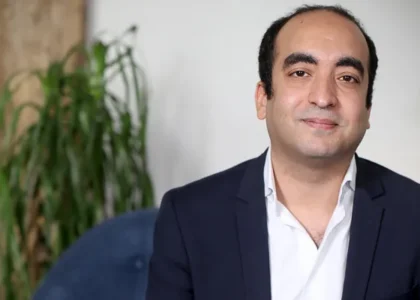

Elliot Smith does not build software for dashboards or growth metrics. He builds for pipes.
Founder & CEO, Motmot
United States
Smith was trained as a civil engineer, the kind of profession that rarely attracts attention until something goes wrong. Early in his career, he worked alongside municipalities and infrastructure operators responsible for systems that run beneath cities, out of sight and largely out of mind. Water mains, in particular, stood out. They were old, expensive, critical, and poorly understood.
Most cities do not know the condition of their underground water infrastructure. Pipes are inspected infrequently, often only after a failure. Breaks trigger emergency repairs, service disruptions, and unplanned capital spending. The problem is not neglect. It is visibility. Infrastructure ages silently, and decision-makers are forced to react rather than plan.
Smith saw this gap not as an engineering failure, but as an information failure.
Before founding Motmot, Smith combined technical training with firsthand exposure to public-sector constraints. He understood how slowly cities move, how budgets are allocated years in advance, and how risk accumulates underground long before it appears on balance sheets. That perspective shaped Motmot from the outset.
Motmot is an infrastructure intelligence company focused on autonomous inspection of pressurized water mains. The company builds robotic systems capable of navigating live pipes without shutting systems down. These robots collect high-resolution data from inside the pipe, allowing utilities to assess condition, identify vulnerabilities, and prioritize maintenance before failures occur.
The ambition is not novelty. It is predictability.
Traditional inspection methods are costly, disruptive, and episodic. Motmot’s approach reframes inspection as a continuous data problem. By embedding intelligence directly into infrastructure, cities gain the ability to move from reactive repair to predictive maintenance. This shift matters. Water main failures cost cities billions annually, damage roads and buildings, and disproportionately affect communities with aging infrastructure.
Smith founded Motmot while completing his MBA at Michigan State University, grounding the company in both engineering rigor and operational reality. The company has since secured competitive validation, including a multimillion-dollar grant from the U.S. National Science Foundation through its SBIR Fast Track program. Motmot has also entered pilot deployments with municipalities, signaling early trust from public-sector operators who are notoriously cautious about new technology.
What distinguishes Smith is not just the robotics, but the restraint. Motmot is not positioned as disruption for disruption’s sake. It is designed to integrate into existing workflows, procurement processes, and regulatory environments. The technology respects the realities of public infrastructure rather than trying to overwrite them.
Smith often frames the challenge in practical terms. Cities do not lack ambition. They lack tools that fit their constraints. Motmot’s systems are built with that reality in mind, prioritizing durability, interoperability, and data that can inform long-term capital planning rather than short-term reporting.
This orientation places Motmot at the intersection of several structural shifts. Climate volatility is stressing water systems. Infrastructure funding is increasing, but scrutiny around spending is tightening. Cities are under pressure to modernize without raising rates or taxes. Intelligence embedded into physical assets becomes not a luxury, but a necessity.
Smith’s work suggests a broader lesson. The next phase of applied intelligence may not come from consumer apps or enterprise software alone. It may come from finally instrumenting the systems that make modern life possible, and doing so in ways that respect public accountability.
Elliot Smith is building for that future. Not by making infrastructure louder or more visible, but by making it legible before it fails.
Click the ⤢ Icon to View the Magazine in full Screen for Best View
Designed as a seasonal publication, Voice of Development brings together research, reporting, and analysis meant to be read deliberately and revisited over time. Winter 2026 is a starting point: an attempt to answer, with clarity and restraint, what AIs can actually do—and what they cannot do.

Disclaimer: VoD Capsules are AI-generated. They synthesize publicly available evidence from reputable institutions (UN, World Bank, AfDB, OECD, academic work, andother such official data sources). Always consult the original reports and primary data for verification.