The “Strengthening AI Foundations” report from 2025 offers a data-rich snapshot of the global AI landscape — with special focus on how low- and middle-income countries (LMICs) can harness AI for development. Open Knowledge Repository
The report argues that meaningful AI-driven development depends on four foundational elements, dubbed the “4 Cs”: Connectivity (digital infrastructure, reliable energy, broadband), Compute (access to AI-ready hardware, data centers or cloud), Context (locally relevant data, data governance), and Competency (skills, AI literacy, local capacity). World Bank
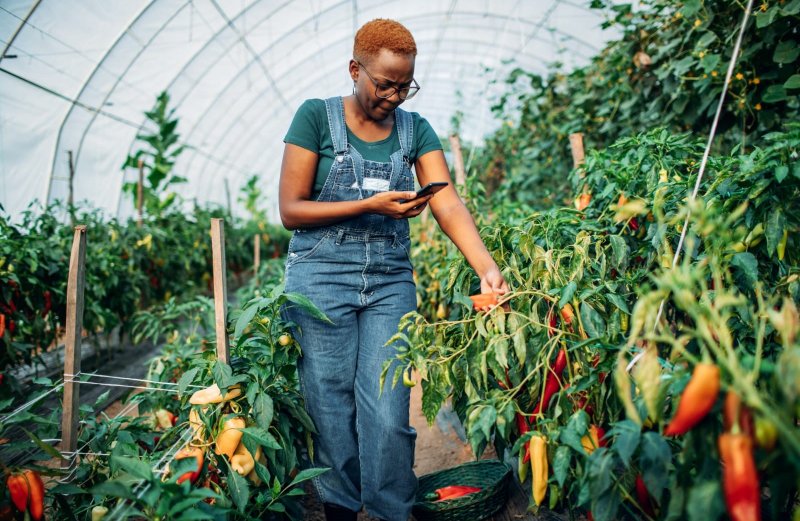
While frontier AI (large proprietary models, expensive compute) remains concentrated in a few high-income countries, the report highlights a “promising trend”: many developing countries are already using “small AI” — affordable, lightweight, easy-to-deploy AI tools that run on mobiles or modest hardware. These are being applied in agriculture, health, education, small business — enabling early gains even under resource constraints. World Bank
However, large inequalities persist: a handful of high-income countries dominate access to the largest models, venture funding, data-center infrastructure, and AI talent — creating real risks of an “AI divide.” World Bank
AI isn’t a magic bullet — it’s more like a powerful new toolset. But just as a carpenter needs good wood, tools, and a workshop, AI too requires infrastructure (internet, power), compute capacity, reliable data, and human know-how. If a country skips any of those, the toolset becomes useless or worse: a source of inequality. The “small AI” approach shows it’s possible to build real value even without cutting-edge frontier AI — as long as the foundations are laid.
| Report / Study (Year – Institution) | What It Covers / Why Useful | Link |
|---|---|---|
| Digital Progress and Trends Report 2025: Strengthening AI Foundations (2025 – World Bank) | Comprehensive global snapshot of AI readiness, adoption, “4 Cs” framework | [Download PDF] Open Knowledge Repository+1 |
| Devising a Strategic Approach to Artificial Intelligence: A Handbook for Policy Makers (2025 – World Bank) | Practical guide for governments to design national AI strategies tailored to their context Open Knowledge Repository | |
| Who on Earth Is Using Generative AI? Global Trends and Shifts in 2025 (2025 – World Bank Policy Research Working Paper) | Empirical analysis of generative AI adoption across countries — shows early diffusion and disparities World Bank+1 | |
| Harnessing Artificial Intelligence for Development: A New Policy and Regulatory Framework (2021 – World Bank) | Exploration of AI potential across development sectors + policy and governance recommendations World Bank+1 | |
| AI, the new wingman of development (2024 – World Bank) | Sector-level review (agriculture, health, education, etc.) of where AI can support development goals The World Bank Documents |
Copy and paste any of the below (our your own) prompts into the VoDGPT to explore further: