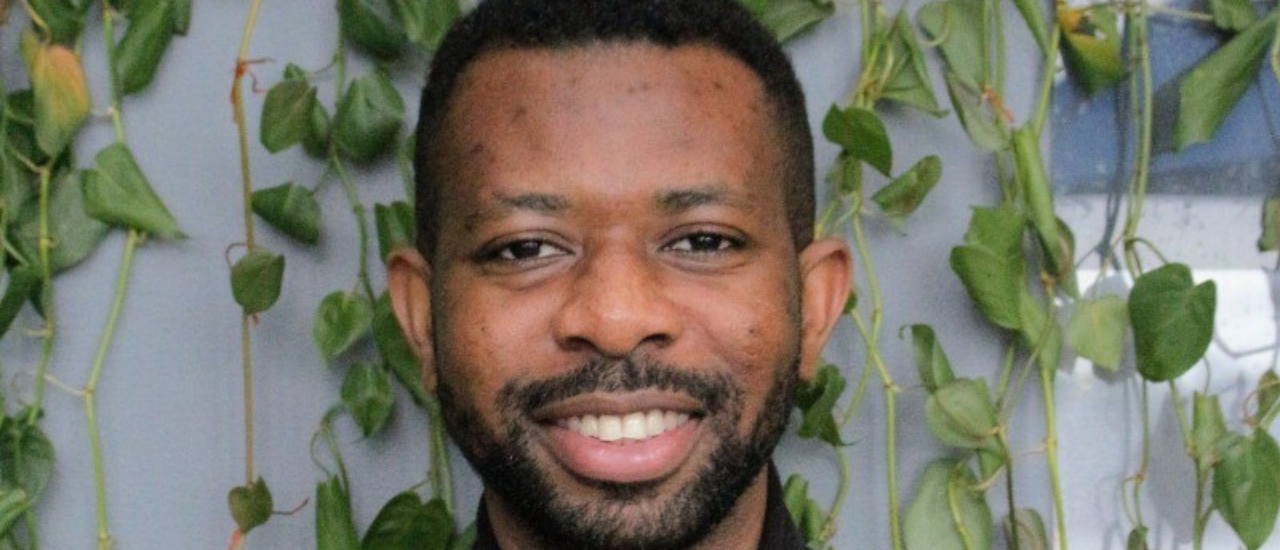
Charles Onu is building artificial intelligence for moments where there is no margin for delay. His work sits at the intersection of machine learning, medicine, and moral urgency, shaped by a simple observation: in many parts of the world, lives are lost not because conditions are untreatable, but because they are detected too late.
Founder & CEO, Ubenwa Health
Nigeria / Canada
Onu is a trained biomedical engineer and AI researcher whose academic work focused on signal processing and machine learning applied to health. During his graduate studies, he became interested in how non-invasive signals, particularly sound, could carry clinically relevant information. That curiosity would later become the foundation of Ubenwa Health.
Ubenwa is built on the premise that the human voice contains diagnostic signals long before overt symptoms appear. The company uses artificial intelligence to analyze vocal acoustics and extract biomarkers that can indicate health conditions, clinical urgency, or the need for intervention. The technology does not rely on specialized hardware. Any microphone-enabled device can serve as the input. That design choice is deliberate.
Ubenwa began with one of the most fragile and time-critical use cases in medicine: neonatal care. Birth asphyxia, a condition caused by oxygen deprivation during birth, is one of the leading causes of neonatal mortality worldwide. It is especially deadly in low-resource settings where diagnostic tools are limited and specialist care is scarce. The clinical window for intervention is narrow, and delayed diagnosis often results in death or lifelong disability.
Onu and his team focused on infant cries as a diagnostic signal. Through years of peer-reviewed research, they demonstrated that cries from newborns suffering birth asphyxia contain distinct acoustic patterns that can be detected by machine learning models. This research formed the scientific backbone of Ubenwa’s first product: an AI-powered screening tool that analyzes a newborn’s cry to flag potential asphyxia risk within minutes.
Unlike many health AI startups that begin with consumer wellness applications, Ubenwa entered the most regulated and clinically demanding domain first. The company pursued clinical validation, hospital pilots, and regulatory pathways early. Its work has been published in academic journals and presented within global health forums, establishing credibility beyond startup marketing.
But Ubenwa’s ambition extends beyond neonatal screening. The company positions voice as a broader clinical interface. The same acoustic analysis framework can be applied to other health contexts, including respiratory conditions, mental health, and medical intake workflows. Ubenwa frames voice not as a novelty input, but as an underutilized diagnostic layer that already exists in every clinical interaction.
Under Onu’s leadership, Ubenwa has grown into a venture-backed health technology company with international recognition. It has received support from global health institutions, innovation grants, and startup accelerators focused on healthcare impact. The company operates across Nigeria and Canada, reflecting both its global health focus and its engagement with advanced research ecosystems.
What distinguishes Onu as an entrepreneur is his refusal to separate scientific rigor from ethical responsibility. He speaks consistently about AI as a clinical tool, not a consumer convenience. Accuracy, interpretability, and safety are treated as non-negotiable. Ubenwa’s products are designed to support clinicians, not replace them, especially in environments where trust in automated systems must be earned carefully.
Onu’s work reflects a broader shift in health AI. The most meaningful applications are not those that optimize already well-resourced systems, but those that close gaps where infrastructure is weakest. By choosing voice, one of the most universally available signals, Ubenwa sidesteps the hardware constraints that limit many digital health tools.
Charles Onu is not building AI for scale alone. He is building it for relevance. His company’s success will not be measured by downloads or engagement metrics, but by whether a nurse, midwife, or clinician can act faster when seconds matter most.
In a field often driven by abstraction and ambition, Onu’s work remains grounded in consequence. The cry of a newborn is not data. It is a signal. Ubenwa is teaching machines how to listen.
Click the ⤢ Icon to View the Magazine in full Screen for Best View
Designed as a seasonal publication, Voice of Development brings together research, reporting, and analysis meant to be read deliberately and revisited over time. Winter 2026 is a starting point: an attempt to answer, with clarity and restraint, what AIs can actually do—and what they cannot do.

Disclaimer: VoD Capsules are AI-generated. They synthesize publicly available evidence from reputable institutions (UN, World Bank, AfDB, OECD, academic work, andother such official data sources). Always consult the original reports and primary data for verification.