
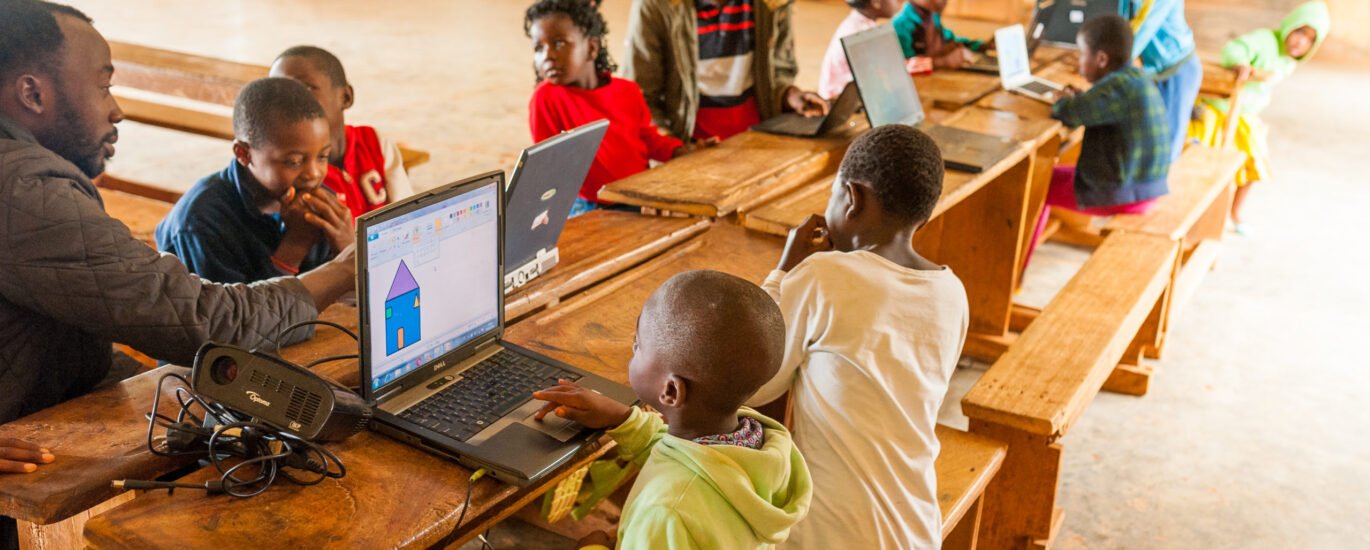
Artificial Intelligence is transforming global development, but without urgent investment in connectivity, compute, context, and competency, the digital divide will harden into an AI divide.
Disclaimer: VoD Capsules are AI-generated. They synthesize publicly available evidence from reputable institutions (UN, World Bank, AfDB, OECD, academic work, and other such official data sources). Always consult the original reports and primary data for verification.
The World Bank’s Digital Progress and Trends Report 2025: Strengthening AI Foundations offers one of the clearest, data-rich assessments of how AI is reshaping development trajectories. It finds that AI adoption is accelerating globally—over 40% of ChatGPT traffic now comes from middle-income countries, with Brazil, India, Indonesia, and Viet Nam among the heaviest users—yet a deep innovation and compute divide persists. High-income countries (HICs) produce 87% of notable AI models, host 91% of cumulative VC investment, and control 50% of global secure servers, while low-income countries (LICs) capture less than 1% of these AI foundations.
The report introduces the 4Cs—Connectivity, Compute, Context, and Competency—as the essential foundations for inclusive AI readiness. Progress is uneven:
Despite these divides, “small AI”—lightweight, locally adapted tools deployable on low-cost devices—already shows transformative impact in education, agriculture, health, and service work. Teachers, nurses, call-center agents, and farmers in Egypt, Nigeria, Philippines, India, and Uzbekistan increasingly use AI as a co-worker, not a replacement.
The World Bank, UN agencies, and regional institutions are aligning around AI readiness frameworks emphasizing governance, foundational digital infrastructure, data stewardship, skills, and equitable access. For browsing:
AI isn’t one technology—it’s an ecosystem whose benefits compound only when the 4Cs mutually reinforce one another. Connectivity enables participation; compute enables capability; context makes AI useful; and competency makes it usable. Development gains will emerge where these systems interact—not where any one pillar exists in isolation. The real risk is not that countries will “miss out on AI,” but that they will be locked into low-value AI participation, unable to shape or benefit from the AI economy.
| Report / Study | What it Covers / Why Useful | Official Link |
|---|---|---|
| Digital Progress & Trends Report 2025 (WBG) | Comprehensive evidence on global AI divides and the 4Cs framework | World Bank OKR |
| World Development Report 2021: Data for Better Lives (WBG) | Foundational principles for safe, equitable data governance | Link |
| UNESCO 2023 – Guidance on Generative AI in Education | Risks, opportunities, and governance pathways in education systems | Link |
| OECD AI Outlook 2023 | Global governance, innovation trends, compute markets | Link |
| AfDB Digital Economy Flagship Reports | Regional digital foundations and infrastructure readiness | Link |
| ILO Global Employment Trends for Youth | Emerging AI impacts on labor markets across skill levels | Link |
See a systems map of how AI could reshape your labor market, data ecosystem, or digital industrial strategy.
How would the 4Cs look if applied to a specific country you care about?
Which sectors in your context are most “AI-ready”—and which are most at risk?
VoDGPT is an AI system powered by OpenAI, and it can make mistakes.
Use VoD Capsules as a starting point for understanding; always review the linked reports and verify critical information.