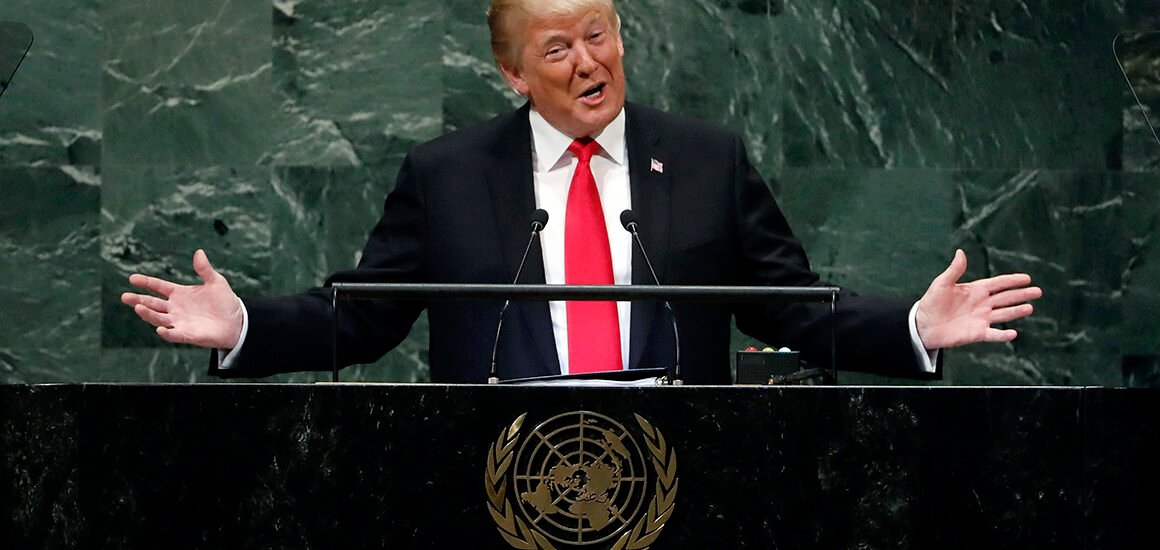
The U.S. decision to exit 66 multilateral bodies marks a structural retreat from global governance forums shaping climate, development, peace, and norms.
Disclaimer: VoD Capsules are AI-curated. They synthesize publicly available evidence from reputable institutions (UN, World Bank, AfDB, OECD, academic work, and other such official data sources). Always consult the original reports and primary data for verification.
At a Glance
The U.S. withdrawal from 66 international organizations signals a strategic shift away from multilateral rule-making toward narrower, sovereignty-first engagement.
.@antonioguterres regrets the announcement regarding the United States’ decision to withdraw from a number of United Nations entities.
The UN has a responsibility to deliver for those who depend on us.
In January 2026, the United States announced its withdrawal from 66 international organizations, including 31 United Nations entities, citing misalignment with U.S. interests, sovereignty, and governance priorities. Affected bodies span climate science, gender equality, development economics, peacebuilding, migration, energy coordination, and rule-of-law institutions across both UN and non-UN systems.
This move reshapes U.S. engagement with the multilateral system anchored by the United Nations, particularly its economic, social, and normative arms. Withdrawals from entities such as UN Women, UNFCCC, UNDP, and UNCTAD reduce U.S. presence in agenda-setting spaces where standards, data, and policy frameworks are negotiated.Beyond the UN, exits from science-policy platforms, climate and biodiversity bodies, democracy and rule-of-law institutions, and regional cooperation mechanisms further narrow U.S. participation in collective problem-solving. While U.S. officials emphasize continued bilateral and ad-hoc cooperation, development partners including the World Bank, OECD, and African Development Bank now operate in a context where U.S. voice is more selective and less embedded in multilateral consensus-building.
The Organizations Impacted:
🇺🇸 Non-UN International Organizations (35)
24/7 Carbon-Free Energy Compact
Colombo Plan Council
Commission for Environmental Cooperation
Education Cannot Wait
European Centre of Excellence for Countering Hybrid Threats
Forum of European National Highway Research Laboratories
Freedom Online Coalition
Global Community Engagement and Resilience Fund
Global Counterterrorism Forum
Global Forum on Cyber Expertise
Global Forum on Migration and Development
Inter-American Institute for Global Change Research
Intergovernmental Forum on Mining, Minerals, Metals, and Sustainable Development
Intergovernmental Panel on Climate Change (IPCC)
Intergovernmental Science-Policy Platform on Biodiversity and Ecosystem Services
International Centre for the Study of the Preservation and Restoration of Cultural Property
International Cotton Advisory Committee
International Development Law Organization
International Energy Forum
International Federation of Arts Councils and Culture Agencies
International Institute for Democracy and Electoral Assistance
International Institute for Justice and the Rule of Law
International Lead and Zinc Study Group
International Renewable Energy Agency
International Solar Alliance
International Tropical Timber Organization
International Union for Conservation of Nature (IUCN)
Pan American Institute of Geography and History
Partnership for Atlantic Cooperation
Regional Cooperation Agreement on Combatting Piracy and Armed Robbery against Ships in Asia
Regional Cooperation Council
Renewable Energy Policy Network for the 21st Century
Science and Technology Center in Ukraine
Secretariat of the Pacific Regional Environment Programme
Venice Commission of the Council of Europe (European Commission for Democracy through Law)
🌍 United Nations (UN) Organizations (31)
Department of Economic and Social Affairs (UN DESA)
UN Economic and Social Council (ECOSOC) — Economic Commission for Africa
ECOSOC — Economic Commission for Latin America and the Caribbean
ECOSOC — Economic and Social Commission for Asia and the Pacific
ECOSOC — Economic and Social Commission for Western Asia
International Law Commission
International Residual Mechanism for Criminal Tribunals
International Trade Centre
Office of the Special Adviser on Africa
Office of the Special Representative of the Secretary-General for Children in Armed Conflict
Office of the Special Representative of the Secretary-General on Sexual Violence in Conflict
Office of the Special Representative of the Secretary-General on Violence Against Children
Peacebuilding Commission
Peacebuilding Fund
Permanent Forum on People of African Descent
UN Alliance of Civilizations
UN Collaborative Programme on Reducing Emissions from Deforestation and Forest Degradation (UN-REDD)
UN Conference on Trade and Development (UNCTAD)
UN Democracy Fund
UN Energy
UN Entity for Gender Equality and the Empowerment of Women (UN Women)
UN Framework Convention on Climate Change (UNFCCC)
UN Human Settlements Programme (UN-Habitat)
UN Institute for Training and Research (UNITAR)
UN Oceans
UN Population Fund (UNFPA)
UN Register of Conventional Arms
UN System Chief Executives Board for Coordination
UN System Staff College
UN Water
UN University
Think About It This Way
Multilateral organizations are less about funding flows and more about who defines problems, evidence, and norms. Exiting them doesn’t stop global coordination—it redistributes influence to others who stay at the table.
Implications (What This Means in Practice)
Agenda-Setting Power Shifts Elsewhere Standards on climate, gender, trade, and development will increasingly be shaped by coalitions where the U.S. is absent, not neutral.
Knowledge Gaps Accumulate Over Time Withdrawal from technical and science-policy bodies reduces access to shared data, peer review, and early warning systems that quietly underpin policy quality.
Bilateralism Replaces Systems Thinking Issue-by-issue deals lack the integrative lenses—across climate, conflict, demographics, and markets—that multilateral platforms are designed to provide.
Institutional Memory Weakens Long-running UN and non-UN bodies store decades of operational learning; disengagement limits feedback loops between global evidence and national policy.
Partners Recalibrate, Not Pause Other governments, foundations, and regional banks continue forward, adjusting governance and financing structures without U.S. leadership.