The 2025 handover from South Africa to a U.S.-hosted G20 marks a pivot from Global-South-centred multilateralism toward a more contested, growth-first, “America First–flavoured” global governance cycle.
Disclaimer: VoD Capsules are AI-curated. They synthesize publicly available evidence from reputable institutions (UN, World Bank, AfDB, OECD, academic work, and other such official data sources). Always consult the original reports and primary data for verification.
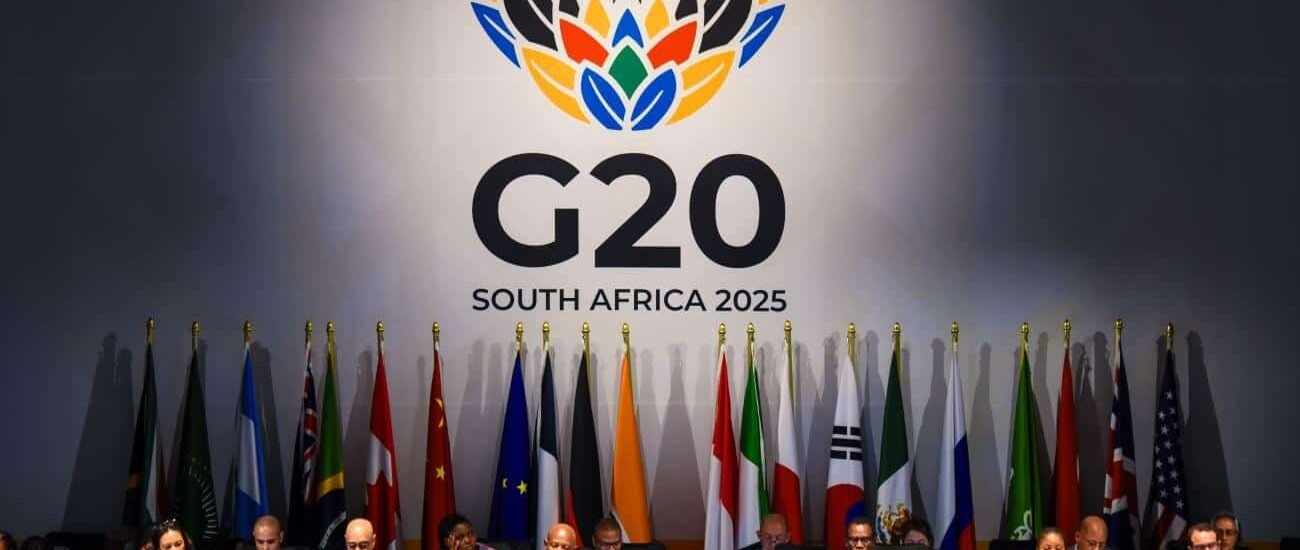
In November 2025, South Africa hosted the G20 Leaders’ Summit in Johannesburg under a presidency built around inclusive and sustainable growth, debt sustainability, MDB reform and just energy transitions. Leaders agreed a declaration that foregrounded debt vulnerabilities, a just energy transition (with particular emphasis on Africa), climate and disaster resilience, and a more representative international financial architecture, while recognising the central role of multilateral development banks (MDBs). Consilium
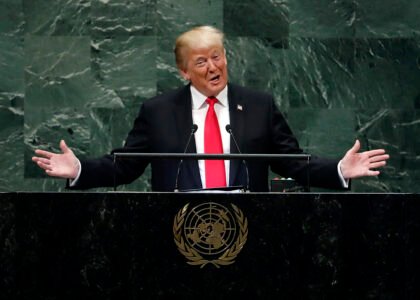
The United States, under President Trump, boycotted the summit but nonetheless took over the rotating G20 presidency on 1 December 2025, declaring a focus on three core themes: cutting regulatory burdens, securing affordable energy supply chains, and promoting technological innovation-led growth. Reuters The U.S. has since announced a “new G20” for its 2026 Miami summit, signalling its intention not to invite South Africa and instead include Poland, a move that breaks with two decades of stable G20 membership practice. mint
Because the U.S. skipped the Johannesburg summit, the physical handover of the G20 presidency instruments occurred quietly at South Africa’s Department of International Relations and Cooperation, where the gavel and related instruments were delivered to a U.S. Embassy official—South Africa’s attempt to maintain procedural continuity despite sharp political disagreement. DIRCO
Substantively, the South African presidency locked in a multi-year agenda on MDB reform via the G20 MDB Roadmap for “better, bigger and more effective” banks, which builds directly on the G20 capital adequacy review and the World Bank’s Evolution Roadmap. Boston University MDBs and regional banks (including the African Development Bank), along with UN bodies, the OECD and the ILO, now carry forward much of the G20’s work on SDGs, jobs and social protection, even as the leaders’ forum itself becomes more politicised. OECD, International Labour Organization.
This isn’t just a geographic handover; it’s a clash of governance models. South Africa’s presidency tried to consolidate a “Global South + MDB reform + climate justice” G20, while the incoming U.S. leadership is signalling a narrower club focused on deregulation, fossil-friendly energy security and strategic allies—potentially at the expense of universality and consensus. Reuters, mint
The result is a stress-test of club governance itself: can a self-selected group like the G20 remain the premier forum for economic cooperation when one large member openly contests the agenda, the membership, and even the meaning of multilateralism?
| Report / Study (Year – Institution) | What it covers / Why useful | Official Link |
|---|---|---|
| G20 Johannesburg Leaders’ Declaration (2025 – G20 South Africa) | Core political commitments on debt, climate, energy, MDB reform and inclusive growth under South Africa’s presidency. G20+1 | G20 2025 Leaders’ Declaration |
| G20 MDB Roadmap: Better, Bigger and More Effective MDBs (2024 – G20) | Detailed reform programme for the MDB system (vision, risk, capital, private capital mobilisation, country platforms). Boston University | G20 MDB Roadmap |
| Multilateral Development Banks Welcome G20 Roadmap for MDB Reform (2024 – World Bank Group) | Joint MDB endorsement of the G20 Roadmap and what it means for scaling finance for SDGs and Paris alignment. World Bank | World Bank statement on G20 MDB Roadmap |
| World Bank Group Statement on Evolution Roadmap (2023 – World Bank Group) | Explains how the Bank will evolve mission, operations and financial model—underpinning the MDB reforms the G20 is amplifying. World Bank | World Bank Evolution Roadmap statement |
| The ILO and the G20 (ILO) | Overview of how the ILO shapes G20 discussions on decent work, youth employment, social protection and just transitions. International Labour Organization | The ILO and the G20 |
| Strengthening cooperation for a changing world: The evolving role of the G20 in global economic governance (2025 – Brookings) | Analytical framing of the G20’s role, engagement groups and links to UN-centred multilateralism—useful to situate the current tensions. Brookings | Brookings G20 governance report |
Copy-paste any of these and I’ll work it through with you:
VoDGPT is an AI system that can make mistakes.
Use VoD Capsules as a starting point for understanding; always review the linked reports and verify critical information.