Data Centers and Energy Consumption: Powering the Digital Economy Does not Power Up Costs, Amazon Argues

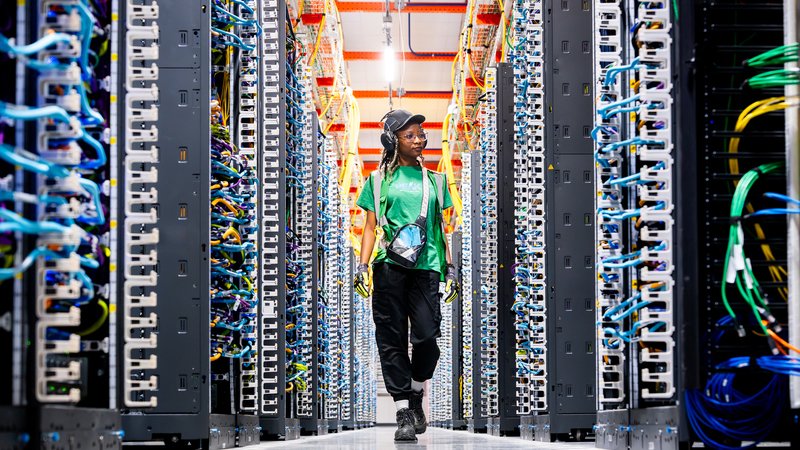
Data Centers are essential infrastructure for the digital age, but their rapid growth poses complex challenges for electricity demand, grid systems, and sustainability—especially as AI workloads surge.

Disclaimer: VoD Capsules are AI-generated. They synthesize publicly available evidence from reputable institutions (UN, World Bank, AfDB, OECD, academic work, andother such official data sources). Always consult the original reports and primary data for verification.

Executive Summary

A new independent, Amazon-commissioned study confirms Amazon data centers pay their own electricity costs and, in several cases, can generate surplus revenue that supports utility grid improvements, potentially lowering costs for other customers. About Amazon This finding arrives amid broader scrutiny of how digital infrastructure impacts energy systems. Across the U.S. and globally, data centers already consume a significant share of electricity, with projections showing this could double by 2030, largely driven by AI and cloud services. IEA Meanwhile, data centers’ energy and water use varies widely by design, cooling technology, and geography, with efficiency improvements and renewable power critical to reducing environmental impacts. The Department of Energy’s Energy.

Context & Evidence

  • Electricity costs & utility impacts: Amazon’s commissioned white paper (by E3) finds data centers studied do not raise residential electricity rates and often fully cover their own energy costs—contrary to public speculation. About Amazon
  • Grid and policy pressures: U.S. lawmakers are investigating data center energy demand amid concerns about rising utility prices and grid strain as AI-focused facilities expand. Data Center Dynamics
  • Energy scale: Data centers globally currently consume several percent of electricity supply, with some forecasts projecting consumption could approach 945 TWh by 2030—roughly equivalent to Japan’s total annual electricity use. IEA
  • Water use: Cooling systems drive significant water use in data centers; in the U.S. alone, billions of gallons are consumed annually, primarily for heat management. socomec.us
  • Sustainability & emissions: Data centers’ share of energy-related emissions is nontrivial and rising with expanding digital workloads, particularly AI. Net Zero Insights

Think About It This Way

Data centers sit at the nexus of digital growth, energy infrastructure, and climate goals: their expanding power demands can stress grids and raise policy questions, but strategic pricing, efficiency improvements, and renewable energy integration can shift outcomes from cost-driven conflict to collaborative grid modernization.


Implications (What This Means in Practice)

  1. Data centers are major but manageable energy loads.
    Their growing demand contributes materially to national and regional electricity use—but efficient design and market mechanisms (like full cost recovery) can mitigate negative pricing impacts.
  2. AI accelerates electricity demand growth.
    Next-generation workloads will amplify grid pressures unless paired with renewable energy and smarter infrastructure planning.
  3. Grid planning and policy must evolve.
    Regulators and utilities will need forward-looking rate designs and capacity planning to balance investment costs without shifting burdens to households or small businesses.
  4. Cooling and water use are integral to sustainability.
    Water and heat management technologies matter as much as electricity sourcing—especially in water-stressed regions.
  5. Energy efficiency yields system benefits.
    Best practices—from advanced cooling to workload optimization—can reduce overall load and help align data center growth with climate goals.
  6. Transparency and data are essential.
    Consistent disclosure of energy use and integration of third-party studies build public trust and inform better policy decisions.

Further Reading

Report / Study (Year + Institution)What It Covers / Why It’s UsefulOfficial Link
E3 Ratepayer Study (2025)Independent evaluation of utility rate design and data center impactsE3 Ratepayer Study on Utility Costs and Data Centers
IEA – Energy Demand From AI (2025)Projected global electricity growth tied to AI and data centersIEA Report on AI & Energy Demand
Energy Efficiency in Data Centers (FEMP)Best practices to boost efficiency and reduce operational energy useDOE FEMP Data Center Efficiency Guide
CarbonBrief Data Center Energy Analysis (2025)Trends in electricity use and geographic concentrationCarbonBrief Analysis of Data Center Energy Use
Global Environmental Cost Assessment (2025)Broader sector impacts on emissions and energy useData Centers and Environmental Cost Overview

Explore Further

  • How can utilities redesign electricity rates to equitably integrate large industrial loads like data centers?
  • What emerging cooling technologies show the most promise for reducing water and electricity use?
  • In what ways can renewable energy procurement strategies reshape the carbon profile of hyperscale data centers?

VoDGPT is an AI system powered by OpenAI, and it can make mistakes.

Use VoD Capsules as a starting point for understanding; always review the linked reports and verify critical information.

About the Author

Leave a Reply

Your email address will not be published. Required fields are marked *

You may also like these