Africa’s AI future hinges less on adopting tools and more on owning infrastructure, data, and governance — or risk a new digital dependency cycle.
Disclaimer: VoD Capsules are AI-curated, and human-reviewed. They synthesize publicly available evidence from reputable institutions (UN, World Bank, AfDB, OECD, academic work, and other such official data sources). Always consult the original reports and primary data for verification.
The United Nations Development Programme (United Nations Development Programme) frames artificial intelligence not as a silver bullet, but as a development capability that must be intentionally built, governed, and owned. In its global AI work — from the UNDP Strategic Plan to the Human Development Report 2023/24 — UNDP emphasizes that AI’s benefits depend on who controls the data, infrastructure, and rules shaping its use.
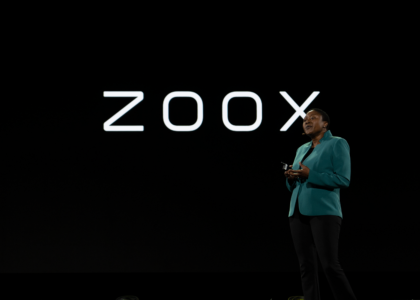
This perspective is sharpened in Africa by the views of Ahunna Eziakonwa, UNDP Assistant Administrator and Regional Director for Africa.
In her essay “Africa’s AI Moment: Build Infrastructure, Own the Future”, she argues that without sovereign digital infrastructure, African countries risk becoming mere consumers of AI systems trained elsewhere, optimized for other contexts, and extracting value outward rather than inward. Her message aligns with UNDP’s broader push for inclusive digital public infrastructure, ethical AI governance, and local innovation ecosystems that link skills, energy, connectivity, and capital.
UNDP’s stance resonates with parallel thinking from the World Bank, OECD, and African Development Bank: AI can accelerate productivity, public service delivery, and climate resilience — but only where foundational constraints (power, data systems, institutions, skills) are addressed first. Otherwise, AI amplifies inequality rather than reducing it.
UNDP is viewing AI less like just apps you get to download, and more like a national capability stack — layered on energy, data, institutions, and trust. Without those layers, “AI for development” becomes extraction by another name.
| Report / Study | What it covers / Why useful | Official Link |
|---|---|---|
| UNDP (2025) – Africa’s AI Moment | Regional perspective on AI, infrastructure, and sovereignty | UNDP Africa Blog |
| UNDP (2023) – Human Development Report | Links AI, inequality, and human capabilities | UNDP HDR |
| UNDP (2021) – Digital Strategy 2022–2025 | UNDP’s framework for digital public infrastructure | UNDP Digital Strategy |
| World Bank (2024) – Digital Public Infrastructure | DPI as foundation for inclusive digital economies | World Bank DPI |
| AfDB (2022) – African Economic Outlook | Technology, productivity, and structural transformation | AfDB Publications |
Turn evidence into agency. Let’s keep exploring.
Click the ⤢ Icon to View the Magazine in full Screen for Best View
Designed as a seasonal publication, Voice of Development brings together research, reporting, and analysis meant to be read deliberately and revisited over time. Winter 2026 is a starting point: an attempt to answer, with clarity and restraint, what AIs can actually do—and what they cannot do.
VoDGPT is an AI system powered by OpenAI, and it can make mistakes.
Use VoD Capsules as a starting point for understanding; always review the linked reports and verify critical information.